
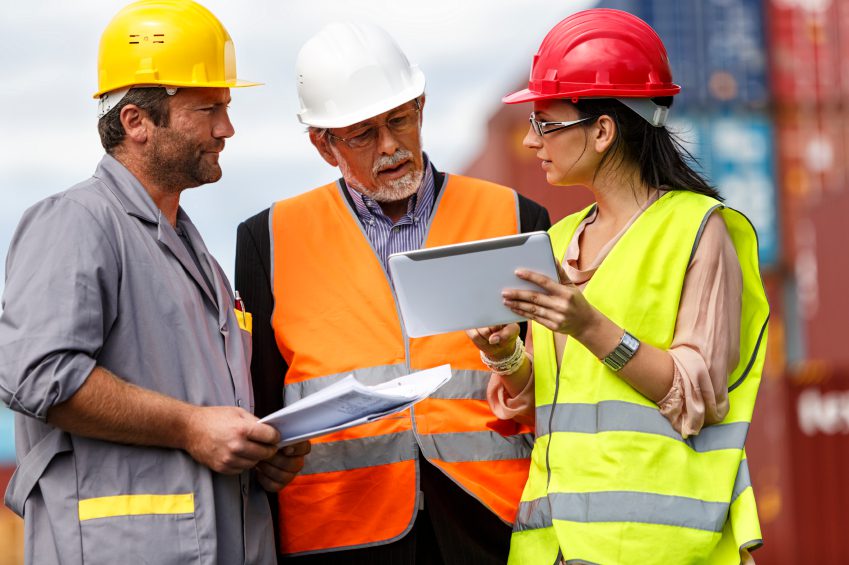
Trust the experts at Native to carry out difficult projects.
Native is equipped to support rigorous quality standards.
We develop customized protocols, methods.
Our teams of scientists use a wide range of instruments.
Copper’s unique properties make it a vital material for urban and industrial growth, as society addresses the challenges of climate change, energy efficiency and raising living standards for the world’s growing population.
As the world seeks to decarbonise, copper is coming into its own as one of the biggest beneficiaries of green-focused infrastructure plans in the US, China and Europe, and is playing a growing part in the global energy mix, both in helping reduce emissions and in the push to develop and deploy green, renewable energy.
Stainless steel has become iconic of high-tech design and construction. Most stainless steels contain about 8-10% nickel. Around two-thirds of all refined nickel produced is used by the stainless steel industry.
Nickel is used to make other alloys with special properties. Corrosion-resistant alloys are used in chemical plants, while ‘super-alloys’ withstand extreme temperatures and are used in aviation. Nickel is also used in electronics and as a substrate for chromium plating.
Nickel is the fifth-most common element on Earth and occurs in sulphides found underground and laterites that can be mined using open pit methods.
The stainless steel industry uses two-thirds of the world’s nickel production and virtually all ferronickel produced each year. The balance is used mainly in the manufacture of alloy steel and other non-ferrous alloys.
Our iron ore operations provide customers with high grade iron ore products which help our steel customers meet ever-tighter emissions standards. In South Africa, we have a share (19.7%) in Kumba Iron Ore.
Iron ore is needed for train tracks and other types of infrastructure, which is one reason for the great demand from emerging economies such as China and Brazil.
But it’s also used in medicine, cosmetics, engineering, construction, paint and a whole range of products we need for modern life.
Technology is demanding increasingly sophisticated forms of steel. Manganese is a vital component of stainless steel and many advanced alloys.
An ingot is a molten metal or alloy that is poured into a mold, cooled, and hardened. In other words, it is made by casting and is also called an ingot.
The ingot is the source of all metal products and is the material that feeds the rolling, extrusion, removal, and other fabrication processes. At the end of the ingot-making process, there is a deoxidization step, and depending on the degree of deoxidization, there are two main categories: rimmed steel (insufficiently deoxidized) and killed steel (fully deoxidized). Killed steel is considered to be better in quality because of the large amount of harmful impurities that remain in rimmed steel.
Discover the Native difference with high-quality aluminum, including our value-add castings (billet, foundry, rod and slab) and a portfolio of patented alloys. We offer a variety of options, including aluminum from our Sustana line and products that carry certifications from the Aluminum Stewardship Initiative.
We continue to take pride in our efficiency and quality. Our global Aluminum Center of Excellence, located in South Africa, delivers breakthrough technologies and automation for our industry. And through our ELYSIS joint venture, we are working to transform the industry with a process that eliminates all greenhouse gas emissions from the traditional aluminum smelting process.
Our global casthouse network produces high-quality castings, including value-add products in various shapes and alloys for customers worldwide.
Aluminum is characterized by its atomic weight of 26.98, the smallest of any metallic material, and its crystals have a face-centered cubic lattice structure. The small atomic weight is associated with lightness of the crystal and good electrical conductivity per weight, and the face-centered cubic lattice structure is associated with easy deformation of the crystal, excellent workability, and non-magnetic properties.
The most significant use of manganese is steel production, which consumes more than 85% of all manganese mined. The ore is particularly useful in increasing steel’s resistance to oxidation; it can also improve the overall strength, durability and workability of the material.
We produce and beneficiate our Manganese sinter to 44 – 46%Mn quality grade. The manganese is sintered from the world’s largest sinter plant that has the ability to produce 2.4 million tonnes of sintered manganese annually.



© 2023 All rights reserved.